
For almost 15 years, we have been selling traditional garments to men as a family business. And our parents already had lederhosen and traditional jackets in their fashion store in Lower Bavaria. Since then, we have learned a lot about leather processing, linen and jacquard fabrics for waistcoats, and loden and felt for our Almliebe jackets and traditional blazers. And above all, about the soul of the man who is usually uncomplicated when shopping but still looking for that very special traditional outfit. The Almliebe sisters Stefanie and Sonja Ragaller reveal the ultimate traditional and styling trends for men!
Oktoberfest Trends 2026 for Men – Lederhosen, Shirt & Styling
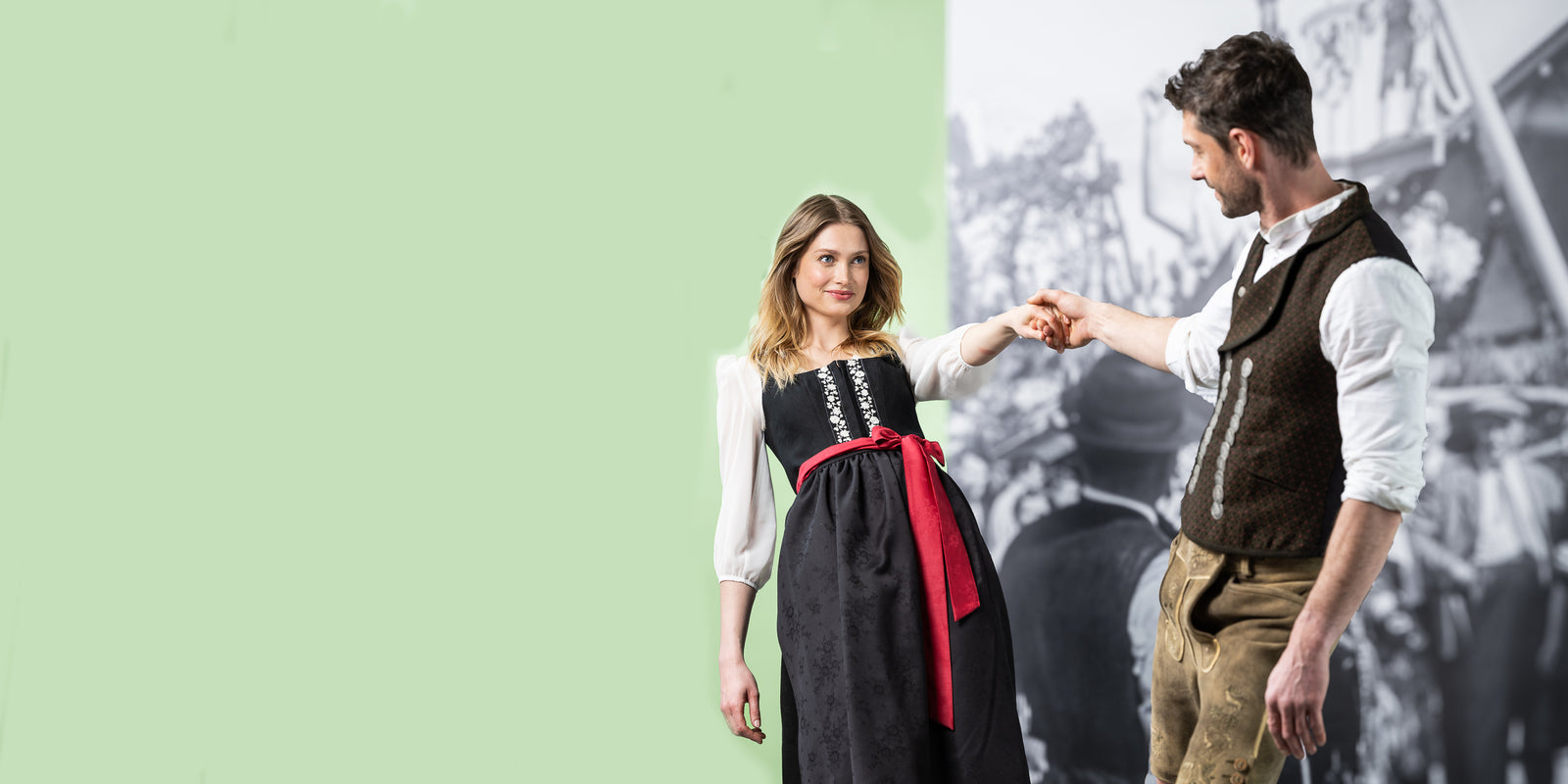
What kind of leather pants will be trendy in 2026?
There's no need to discuss the length of lederhosen in 2026 either. They will definitely remain short, above the knee. Knickerbockers and long lederhosen won't be able to surpass short lederhosen this season either.
Buttons or laces on lederhosen? That's a matter of taste. In the past, it was said that staghorn or buffalo horn buttons were more common in Austria, while leather or fabric laces were more prevalent in Upper Bavaria. This has now become mixed. Embroideries and colors from Austria and Bavaria are being reinterpreted, and buttons or laces as stylistic elements can no longer be clearly assigned to a specific region. The important thing is that the embroidery is authentic and not too kitschy or flashy.
Embroideries on lederhosen remain rather subtle and tone-on-tone. Almost anything can be combined with neutral embroidery. Dark green tones remain a theme, and subtle light or dark blue tones also remain in the lederhosen collections. Eye-catching embroideries in light green or strong green are for the man who wants to stand out and wears rather neutral waistcoats and vests, for example, in dark grey or black.
Light natural tones and shades of grey remain important and modern for lederhosen. The classic brown lederhosen can be worn, but only if you are very conservative and not open to new trends, so to speak, looking for lederhosen for life. Click here for our lederhosen
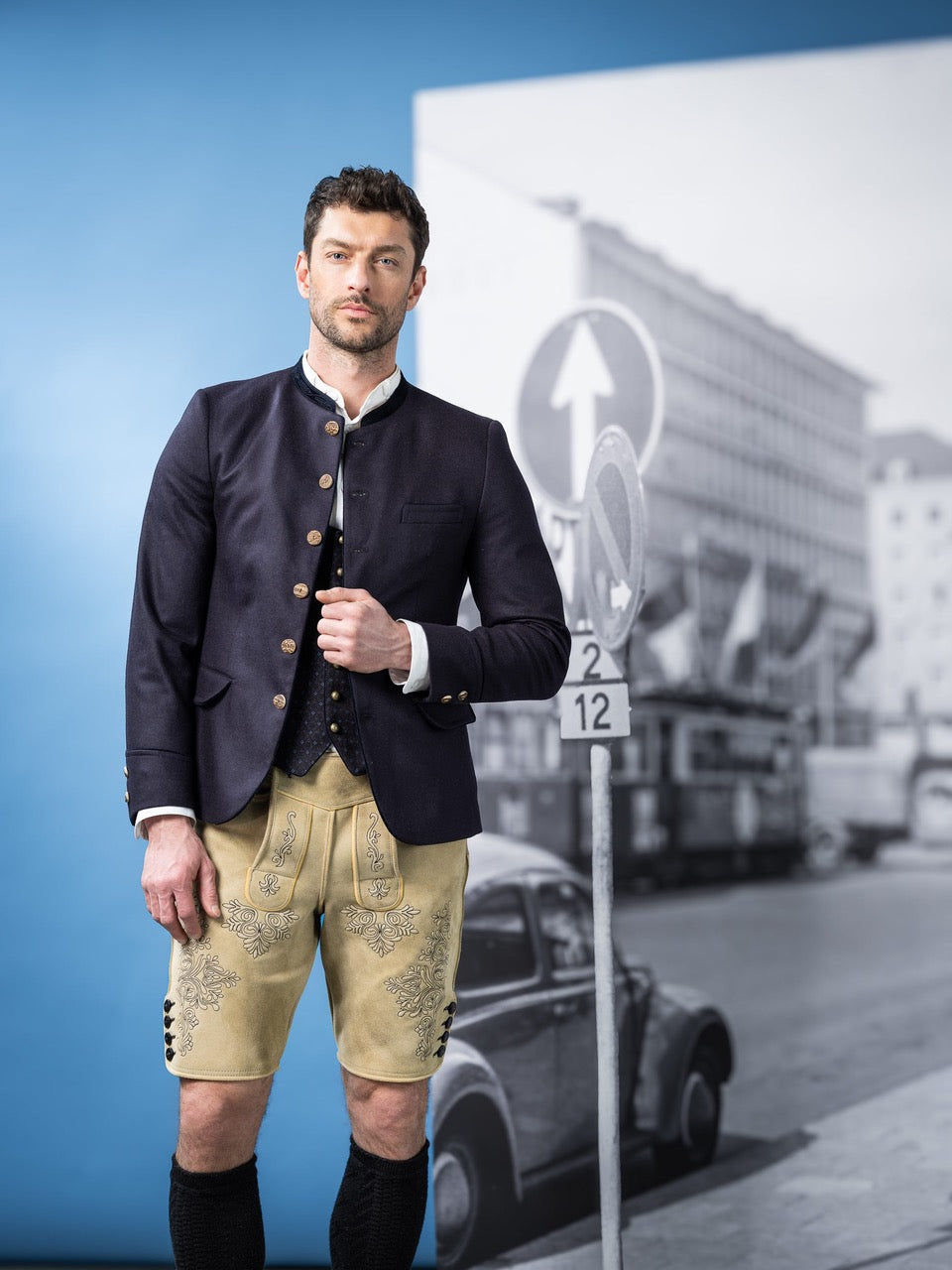
Goat or deer lederhosen? What's the difference?
The deerskin lederhosen are an investment that usually pays off because they are timeless and are often passed down to sons and grandsons. It is the highest quality leather, very robust, yet adapts well to the body and is very breathable. After a short time, it feels like a second skin. The big difference to goatskin is also the high-quality workmanship. Deerskin lederhosen are usually chamois-tanned, meaning tanned naturally. The other steps in the process are also usually handcrafted to a very high standard. For example, the dyeing technique and especially the embroidery. The deerskin lederhosen are a luxury product that you can get at Almliebe starting from around 1000 euros.
But a lot has also happened with goatskin lederhosen in terms of quality and workmanship. While in the past the difference to deerskin lederhosen was obvious, laypeople generally find it difficult to recognize the difference in quality at first glance. This is because goatskin lederhosen are also partly very high-quality in their workmanship, the leather colors look authentic, and the embroideries have also developed further in terms of craftsmanship. They feel different from deerskin lederhosen and don't look quite as noble, but you can get goatskin lederhosen from about 250 euros. High-quality goatskin lederhosen from the Austrian manufacturer Ostarrichi or from Beckert cost around 500 euros.
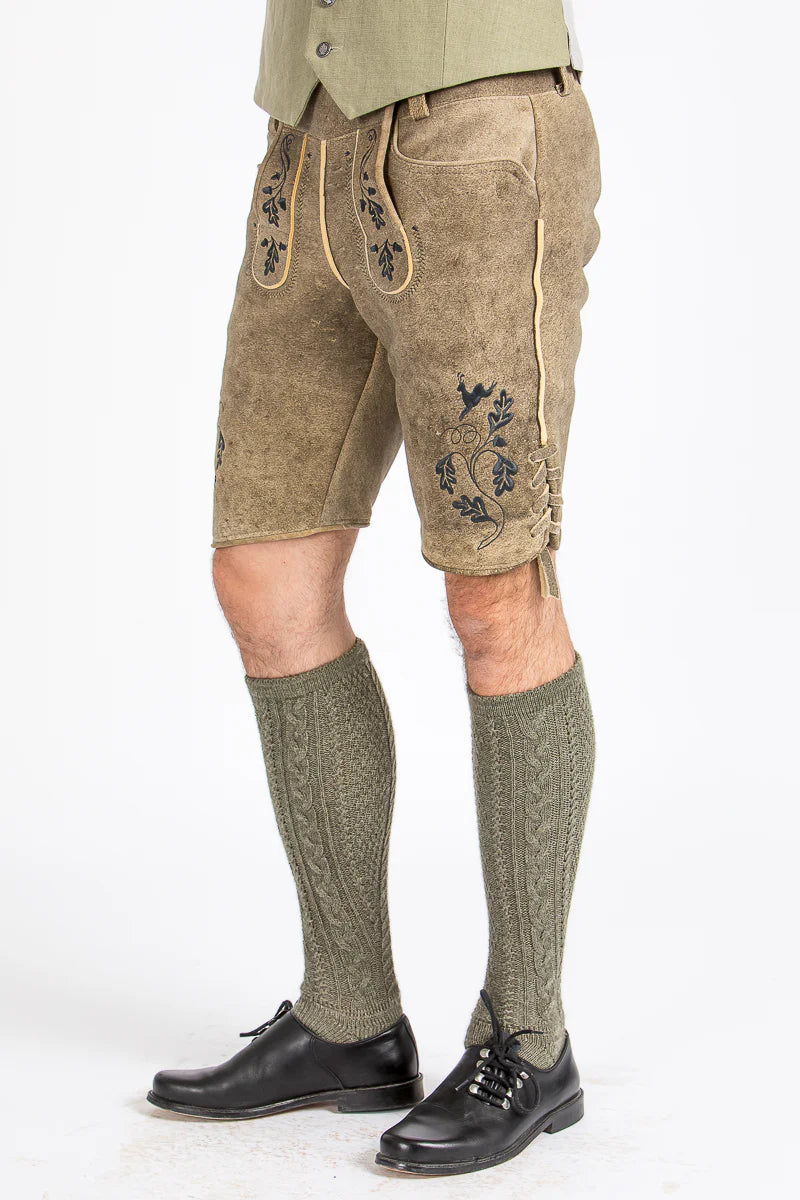
What's the alternative to lederhosen? Stresemann trousers
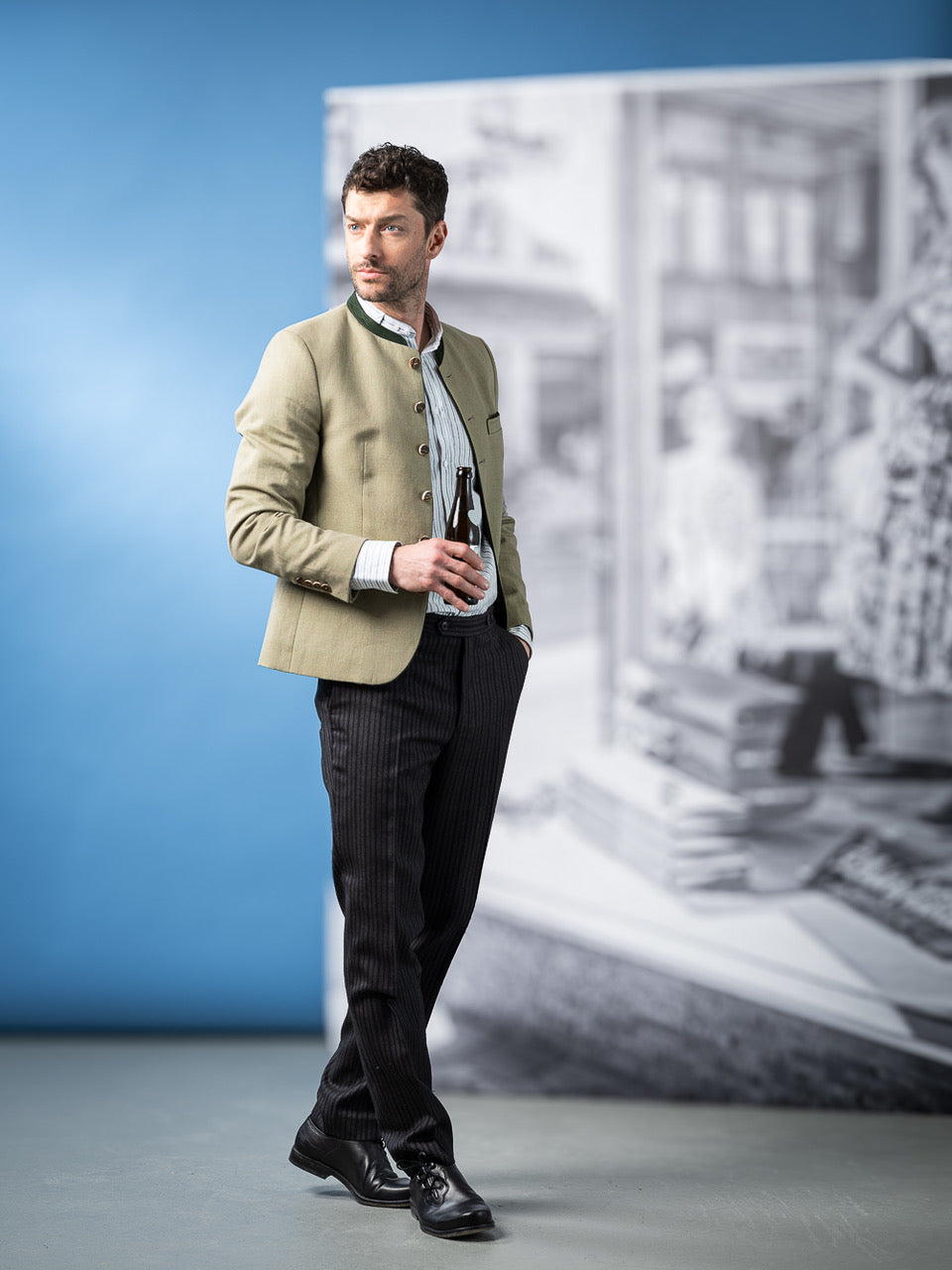
Anyone thinking of jeans now is completely wrong. Nowadays, even as a tourist or newcomer, you can hardly dare to go to the Oktoberfest without traditional costume. Traditional costume is omnipresent and, for most people, is simply part of the Oktoberfest's flair and atmosphere. By the way, this also applies to all other folk festivals – whether in Bavaria or America. What has, however, developed into a real alternative is the classic Stresemann trousers. Often striped, in anthracite or black, and combined with suspenders. In the past, the Stresemann was the festive attire, while lederhosen were worn more for work and everyday life. Especially at weddings where traditional costume is worn, grooms today are more often opting for traditional trousers again, especially in autumn or winter when you often get cold in short lederhosen. Moreover, you can stand out from the crowd and appear very knowledgeable and traditional at the same time.
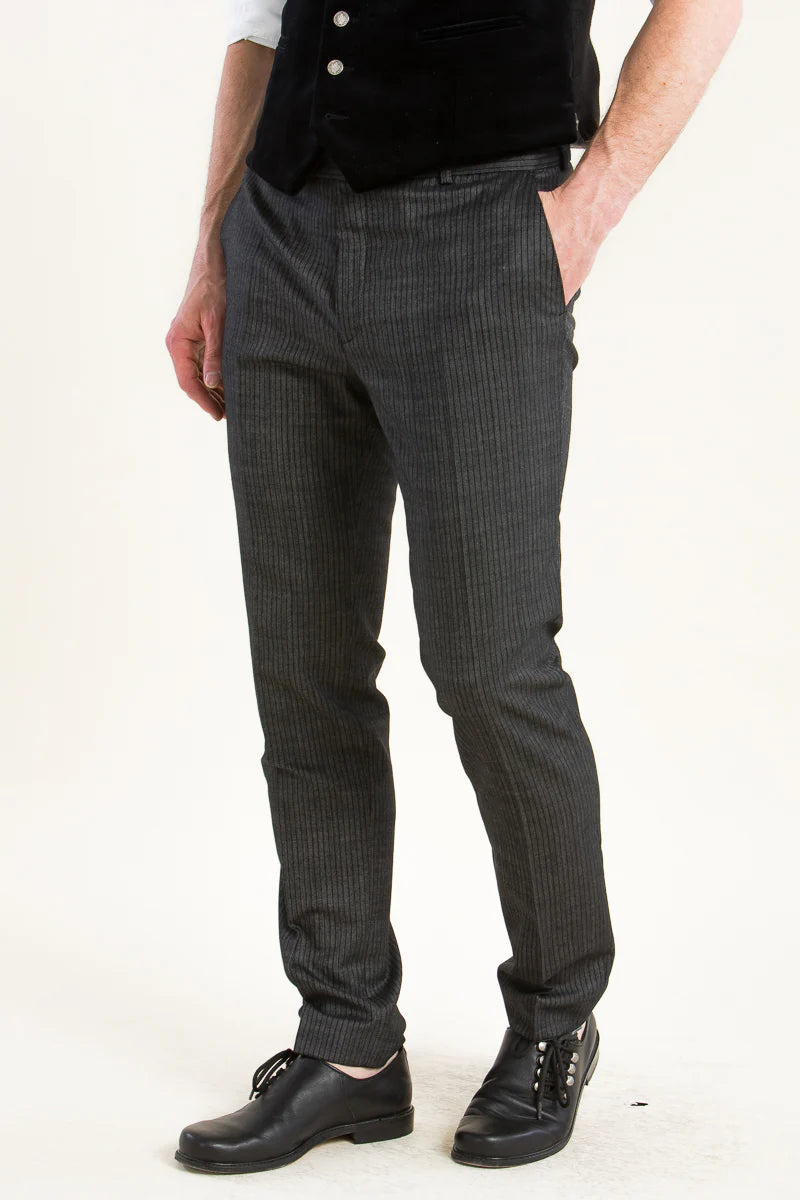
What do men wear with lederhosen?
Very important: No suspenders! At least not if you're not part of a traditional costume club or haven't inherited hand-embroidered suspenders from your grandmother. The classic 90s combination of brown Lederhosen with matching suspenders is a thing of the past. In summer, informed men can consider colorful linen shirts and fabric suspenders with their Lederhosen. Otherwise, the rule is: the waistcoat/traditional vest trumps classic Lederhosen suspenders. Instead, some Lederhosen come with a matching leather belt.
Underpants, yes! The myth of bare leather on the skin, similar to a Scottish kilt, persists especially in the Anglo-American world. All other legends about what's underneath are just legends that no longer hold true today ;-)
The Traditional Shirt
Slim-fit traditional shirts with a stand-up collar, plain or with subtle stripes, are now a must-have with lederhosen. Alternatively, a pull-on shirt or "Pfoad" that isn't fully buttoned and is cut a little wider can also work. Pure linen shirts, even in colors like grey, green, or blue, can look great, especially with light-colored lederhosen. However, large-checked shirts in the classic tablecloth style in white-blue or white-red are an absolute no-go and will out you as a non-local.
Gilet or traditional vest
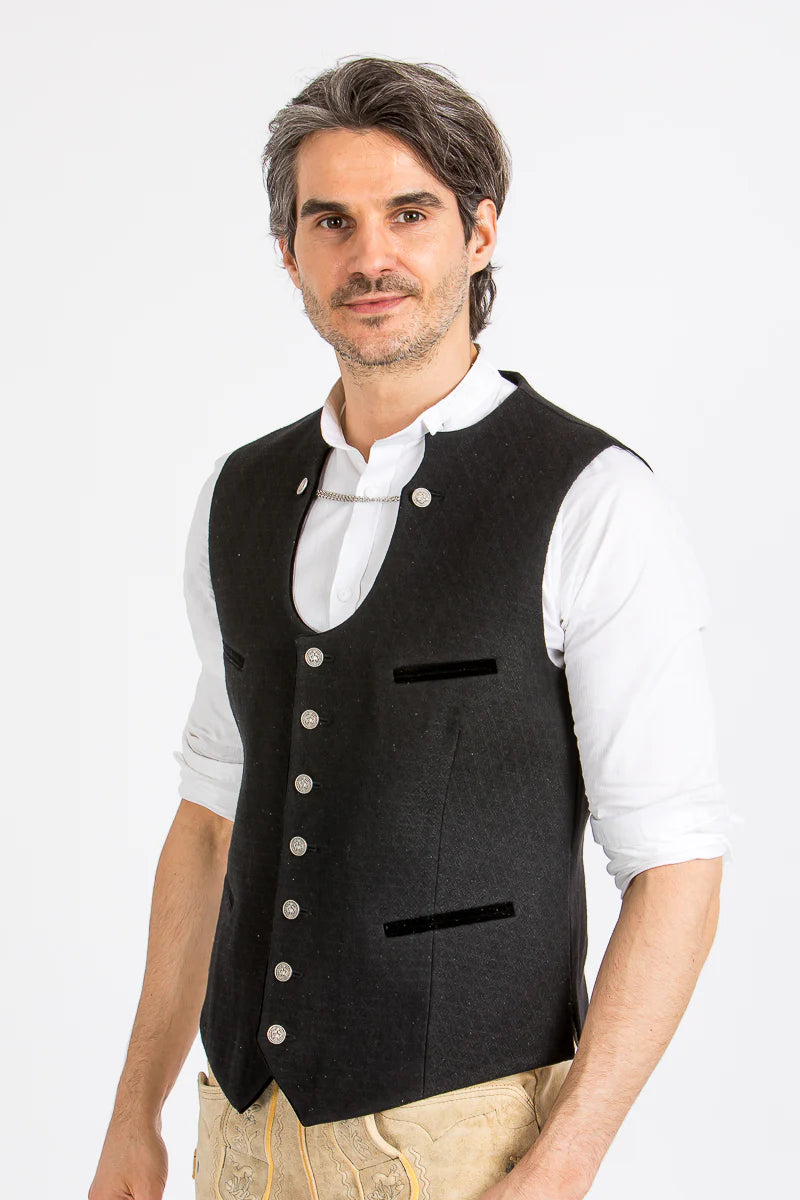
The slim-fit, high-necked vest with a stand-up collar is almost a basic item alongside short leather trousers and a shirt. For Oktoberfest 2026, dark blue, dark green, and black will be very popular. The "Porsche" among vests is the traditional vest from the premium label Gottseidank. But Almliebe also offers high-quality vests made from fine woven fabrics. A rising star among traditional vests is the Miesbach vest. This traditional vest style with its rounded neckline at the front and chain was formerly worn with striking suspenders. Today, the neckline has been modernized, is not as deep, and fits well over traditional shirts with decorative pleats.
Bavarian Shoes & Traditional Socks
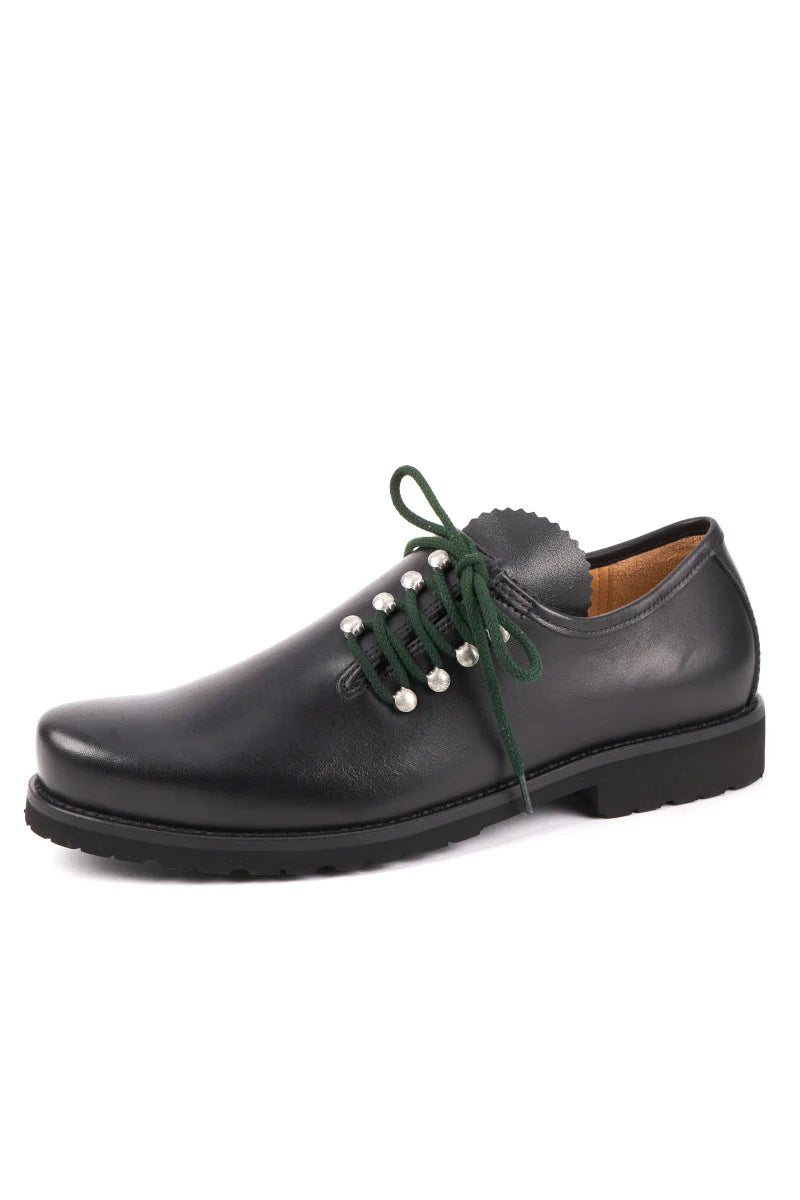
Definitely Haferl shoes. The more festive the occasion – and the Oktoberfest is the highlight of all festivals – the more traditional the footwear. Side-laced leather Haferl shoes in black are definitely part of the Lederhosen. Haferl shoes with leather soles look more delicate but are not as robust as shoes with rubber soles. This is more of a practical consideration, depending on the weather and mood at the Oktoberfest. Sneakers or casual leather shoes are allowed in beer gardens, but of course also for tourists who rarely have the opportunity to wear traditional clothing.
Traditional stockings: Here, too, the rule applies: the more festive the occasion, the higher the stockings. This means that for really festive occasions like weddings or the Oktoberfest, knee-high wool stockings are worn. Even if it's a bit warm, dear gentlemen! In midsummer or, for example, for a forest festival in the countryside, short socks for rolling down or "Schoppen" are also acceptable. The classic, divided Loferl (shin and footie) are also back in style, especially since the brand Gottseidank has re-introduced them in a very high-quality version, made of merino wool.
Traditional Costume Accessories
Less is more. Better one beautiful, valuable accessory like the classic Charivari (chain for lederhosen with various pendants) than many meaningless cheap ones. A hat should also be something special and suit the wearer. Cheap "Seppl hats" should be avoided. Funny pins, for example from Gaudiknopf, can be witty on a hat or waistcoat.
Who needs a traditional Bavarian jacket anyway?
At the Oktoberfest in September, it can get unpleasantly cold, especially in the evenings. A slim-cut janker or a traditional jacket is the ideal addition to the Oktoberfest look of short lederhosen, shirt, and waistcoat. Just make sure not to lose or leave it behind in the beer tent. Denim jackets or outdoor jackets with a traditional outfit are unfortunately an absolute no-go. For those who prefer a less formal look, a casual knitted janker can also be worn. For festive occasions like weddings in traditional attire, there is no substitute for the traditional jacket, which is usually slim-cut and has a stand-up collar. The best colors for a janker are still dark blue, grey, green, and increasingly black again.